
Strangulation Increases the Risk of Homicide by 750%
A Pattern the System Wasn’t Built to See

Content Note & Series Context
This essay contains first-person descriptions of intimate partner violence, sexual assault, and non-fatal strangulation. It discusses lethality risk, post-separation danger, and the long-term neurological and psychological effects of oxygen deprivation. Reader discretion is advised.
This piece belongs to an ongoing body of work examining coercive control as a system - not a series of isolated incidents. In earlier essays, I’ve written about how emerging technologies, particularly AI, can be used to distort reality, extract compliance, and cause harm without leaving visible marks. This essay does not center on artificial intelligence. It centers on something far older and more direct: hands around a throat.
The connection is structural, not metaphorical. Whether an abuser uses software, surveillance, scripted interrogation, or physical force, the outcome is often the same. This is the kind of damage that accumulates quietly, with consequences that appear later, and a system that struggles to recognize harm unless there is a witness.
In coercively controlled environments, there is almost never a witness. Abusers who rely on domination rather than chaos do not perform violence in public. They perform credibility. They cultivate charisma. They present as reasonable, articulate, even concerned. What happens behind closed doors is carefully engineered to remain unseen, uncorroborated, and therefore easy to dismiss. Systems trained to respond to incidents rather than patterns often accept that performance as truth.
Non-fatal strangulation has become a growing focus of national education and prevention efforts precisely because of this invisibility. Organizations like the Training Institute on Strangulation Prevention have spent decades documenting its medical and legal implications, pushing for improved professional training, and re-framing strangulation as the near-fatal act it is.
January is recognized by many advocates as Strangulation Awareness Month, with January 25 observed as Strangulation Awareness Day not as a symbolic gesture, but as a data-driven acknowledgment of how strongly strangulation correlates with later intimate partner homicide.
Coercive control does not require advanced tools to be devastating. Sometimes the most dangerous abuse leaves no bruises at all. And often, the harm that goes unseen - because there was no witness willing or able to see it - is the harm most likely to turn fatal.
Strangulation Is Not a Metaphor
The research says it plainly which is why I chose that as the title for this essay.
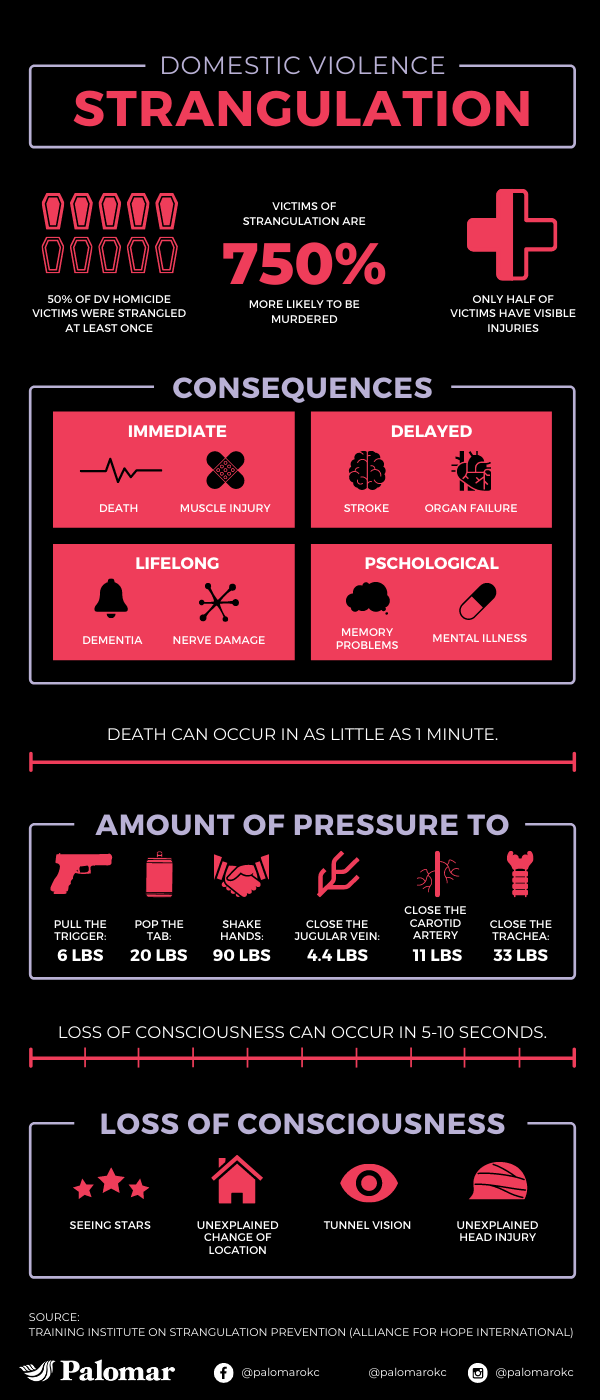
That number is not symbolic. It is not rhetorical. It is actuarial.
Strangulation is not a metaphor for control. It is control - applied directly to the airway, the bloodstream, and the brain.
My abuser strangled me many times. These selected examples that follow are not included for shock value but rather, they establish the perspective from which I write. These events took place in the same home I still live in today. Although I have made many advancements in my healing, I still move through these rooms carrying flashbacks, racing thoughts, and ghosted physical sensations of terror.....my body remembering what the walls already know.
On the floor between the dining area and the kitchen, I grayed out. I came back with everything sounding robotic, aware only that he was getting up from on top of me and that I didn’t know how we got there. That robotic sound became a recognizable marker in all these scenarios, an internal warning that told me to do whatever I could think of to keep the peace.
In bed, on multiple occasions, he forced himself upon me while hissing his hatred inches from my face, his hands around my throat, acting as if I should be enjoying it. At the time, I called these assaults “angry sex” - language that made these situations survivable, even if not entirely accurate.
After he threw me across the garage, his body chased mine. His hands reached for my neck - pressing, then releasing, adjusting his grip - while I struggled to catch my breath and fight off a man more than double my weight.
At one point, while he was demanding that I use my hands to masturbate him (something he required for hours at a time, regularly) my dry, damaged cuticles caught and injured him. They were damaged because he rarely allowed me time alone in the bathroom to tend to basic hygiene. My hands were almost always busy serving him in some way. The moment my cuticle caught his sensitive skin, his arousal flipped instantly to rage. He jumped up from his chair and locked his hands against my throat, pushing up against my chin as the force of his attack sent the wheeled office chair I sat in sliding backward across the room, his face coming nose to nose with mine as he strangled me in response.
None of this was accidental. None of this was consensual. None of this was ambiguous.
What the Research Has Already Established
What strangulation does clinically, neurologically, and statistically is often misunderstood, even by professionals tasked with recognizing danger.
U.S. research cited by the Centers for Disease Control and Prevention and the U.S. Department of Justice consistently identifies non-fatal strangulation as one of the strongest predictors of later intimate partner homicide. Survivors who have been strangled by a partner are more than seven times more likely to later be killed by that partner than those who have not.
Medical research synthesized by the Training Institute on Strangulation Prevention shows that loss of consciousness can occur in seconds, that brain injury can occur without visible external marks, and that death can follow hours or days later due to vascular injury such as carotid artery dissection or stroke.
The sensory distortions I experienced - the robotic sounds, the memory gaps, the dissociation - are not psychological exaggerations. They are hypoxic brain responses. This is what happens when oxygen and blood flow to the brain are restricted.
This is why strangulation is now classified in many jurisdictions as attempted homicide, not assault. It is not a loss of control. It is the deliberate application of it, demonstrating that death is immediately available.
Where the Law and the Data Collide
This is where misunderstanding becomes dangerous.
Protective orders do reduce overall violence. They lower rates of repeat assault, harassment, and stalking. But U.S. data clearly demonstrates that the period immediately following separation is the most dangerous time, particularly in cases involving coercive control and prior strangulation. A majority of intimate partner homicides occur after a survivor leaves or attempts to leave, not before.
Protective orders change the terrain. They document boundaries and create legal consequences. What they do not do by themselves is to erase a risk profile that has already been established through strangulation.
Firearm access matters enormously in this calculus. Research from the National Institute of Justice and public health scholars consistently shows that the presence of a firearm increases the risk of intimate partner homicide and that protective orders are only associated with meaningful reductions in homicide when firearm access is actually removed and enforced.
In my case, there is a three-year restraining order in place. A child protective services no-contact order remains active through divorce proceedings. His gun rights were legally taken, and he no longer has access to the firearms that were part of our shared property.
Those facts matter. They reduce my risk and are not meaningless.
They are also not guarantees.
I do not know what he may or may not have access to outside formal channels, and I am careful not to present assumption as fact. Like many survivors, I live in the space between documentation and intuition - aware that strangulation permanently alters the risk landscape, regardless of time passed or paperwork filed.
Where the United States Is Now
In the United States, recognition of coercive control remains fragmented. While strangulation has increasingly been identified as a high-risk factor for intimate partner homicide, and while some states have expanded statutory language to acknowledge patterns of abuse, the dominant legal framework still prioritizes discrete, provable events over cumulative harm.
This creates a structural contradiction. Research and professional consensus increasingly acknowledge that strangulation, stalking, surveillance, isolation, financial control, and psychological domination function together as part of a coercive system. Yet most U.S. legal processes - criminal charging, evidentiary thresholds, emergency injunctions, even custody determinations - are still organized around incident reports, visible injury, and contemporaneous witnesses.
As a result, recognition varies not only by state, but by court, by agency, and by individual professional interpretation. In some jurisdictions, coercive control may be considered in family court but not criminal court. In others, strangulation may be elevated to a felony without being contextualized as part of a broader pattern. The same behavior can be visible in one setting and functionally invisible in another.
This inconsistency is often misinterpreted as a failure of awareness. In reality, it reflects a deeper design issue. U.S. systems were built to adjudicate acts, not relationships. They are well-equipped to respond once violence is undeniable, but poorly suited to identify risk when harm accumulates quietly and escalation is still preventable.
Within this framework, strangulation presents a particular challenge. It is both an act and a signal.....a near-fatal event that frequently occurs within a longer arc of coercive control. When treated in isolation, its predictive value is lost. When recognized as part of a pattern, it becomes one of the clearest warnings available.
Lessons from England, Wales, and Scotland
England and Wales formally criminalized coercive control in 2015 under the Serious Crime Act, explicitly defining controlling or coercive behavior as a pattern of conduct rather than a single incident. Scotland followed in 2018 with its own domestic abuse legislation, which went further by embedding coercive control as the central organizing principle of abuse itself.
These laws marked a significant conceptual shift. For the first time, courts were authorized to evaluate ongoing behavior over time, including psychological, financial, and social control, and to treat survivor testimony as evidence of cumulative harm rather than anecdotal context. In theory, this addressed the very limitations that continue to constrain U.S. systems.
In practice, the results have been mixed - instructive, but not transformative.
On one hand, the laws have improved the language available to survivors and professionals. They have enabled earlier intervention in some cases, allowed patterns to be named explicitly, and re-framed acts like strangulation as part of an escalating system rather than isolated assaults. They have also influenced professional training and public understanding, slowly shifting expectations away from “one bad incident” narratives.
On the other hand, enforcement has proven uneven. Police and prosecutors in England, Wales, and Scotland have struggled with evidentiary standards, interpretation, and confidence in applying the law. Many cases remain undercharged or dismissed due to uncertainty about how to present patterns without traditional corroboration. The absence of witnesses continues to complicate prosecution, even where the law technically allows pattern-based evaluation.
What these jurisdictions demonstrate is not that coercive control laws fail, but that recognition alone does not guarantee application. Changing statutes opens the door to pattern recognition. Walking through it requires training, cultural shift, and a willingness to move beyond event-based proof as the primary marker of harm.
In that sense, the UK experience reinforces rather than contradicts the central argument of this essay. Systems can evolve to name coercive control. But unless they are redesigned to see patterns without spectacle, the most dangerous abuse will remain easy to miss - until it is no longer survivable.
Why Awareness Is Not Optional
Strangulation does not expire. It does not soften with distance. It does not become less lethal because someone survived it.
If you have been strangled and told it “wasn’t that bad,” the science disagrees.
If you have been strangled and told to move on, the research data disagrees.
If you have been strangled and survived, your survival does not negate the severity.
In actuality, it just confirms how narrow the margin was.
Awareness is not about convincing everyone or even expecting a total elimination of the issue. It is about recognizing patterns early enough that we are not pretending surprise when people behave in ways which we already know humans are capable.
Awareness is necessary to build support structures at a community level - the kinds of structures that address not only education, but the material and logistical assistance people need to rebuild their lives after harm.
Awareness spreads not through unanimity, but by making it harder to pretend the pattern isn’t there.
Architecture of Silence
Strangulation remains one of the most minimized forms of domestic violence because it doesn’t always leave bruises, because it happens fast, and because survivors are often alive afterward - even expected to prove how close to death they were.
Statistics matter here not to replace lived experience, but to corroborate it. When survivors describe strangulation, they are not describing “rough moments” or even a consensual BDSM act - be fairly warned that I invite no debate about whether victims “like it” just because there’s some pop culture book, movie, trend or fetish the commenter thinks to be in alignment with what I have already described. Survivors are describing near-fatal events that research has already mapped with chilling precision.
The USA’s legal system is built to recognize isolated events instead of patterns of coercive control - and harm without witnesses becomes easy to dismiss. In that gap, strangulation is not an anomaly, but a warning the system was never designed to hear.
Silence doesn’t just fail survivors.
It prevents pattern recognition.
References
Sources, including U.S. and comparative international legal frameworks.
updated from original posting
Centers for Disease Control and Prevention (CDC)
National Intimate Partner and Sexual Violence Survey (NISVS): https://www.cdc.gov/nisvs/about/index.html
Preventing Intimate Partner Violence: https://www.cdc.gov/intimate-partner-violence/about/index.html
U.S. Department of Justice, Bureau of Justice Statistics (BJS)
Intimate Partner Violence, 1993–2010: https://bjs.ojp.gov/content/pub/pdf/ipv9310.pdf
Female Murder Victims and Victim–Offender Relationship: https://bjs.ojp.gov/library/publications/female-murder-victims-and-victim-offender-relationship-2021
Homicide Trends in the United States: https://bjs.ojp.gov/library/publications/homicide-trends-united-states
Battered Women’s Justice Project (BWJP)
Coercive Control Codeification: A Brief Guide for Advocates and Coalitions: https://www.bwjp.org/assets/documents/pdfs/cc-codificationbrief.pdf
Training Institute on Strangulation Prevention
https://www.allianceforhope.org/training-institute-on-strangulation-prevention
Johns Hopkins Bloomberg School of Public Health
Domestic Violence and Firearms: https://publichealth.jhu.edu/center-for-gun-violence-solutions/solutions/domestic-violence-and-firearms
New England Journal of Medicine (NEJM)
Intimate Partner Violence Review: https://www.nejm.org/doi/full/10.1056/NEJMra1807166
UK Government - Serious Crime Act 2015, Section 76
Controlling or Coercive Behaviour (England and Wales): https://www.legislation.gov.uk/ukpga/2015/9/section/76/enacted
UK Home Office - Controlling or Coercive Behaviour
Statutory Guidance Framework: https://www.gov.uk/government/publications/controlling-or-coercive-behaviour-statutory-guidance-framework
HM Inspectorate of Constabulary and Fire & Rescue Services
The Police Response to Domestic Abuse: https://www.justiceinspectorates.gov.uk/hmicfrs/publications/the-police-response-to-domestic-abuse-an-update-report/
Crown Prosecution Service (CPS) - Controlling or Coercive Behaviour
Legal Guidance: https://www.cps.gov.uk/legal-guidance/controlling-or-coercive-behaviour-intimate-or-family-relationship
UK Government - Domestic Abuse (Scotland) Act 2018
https://www.legislation.gov.uk/asp/2018/5/contents/enacted
Scottish Government - Evaluation of the Domestic Abuse (Scotland) Act 2018
https://www.gov.scot/publications/domestic-abuse-scotland-act-2018-interim-reporting-requirement/pages/4/
Crown Office and Procurator Fiscal Service (Scotland)
Domestic Abuse Prosecution Guidance: https://www.cps.gov.uk/prosecution-guidance/domestic-abuse#a04
I’m so sorry you went through this and it’s hard interesting the language we use to get through it. It’s also interesting that NFS wasn’t a crime when I experienced it!